
Delv Warehousing
Scoped per clientDelv Warehousing: store your stock and move it across the state.
Dedicated or shared space run by our team, with primary and secondary distribution planned from the same stock record.
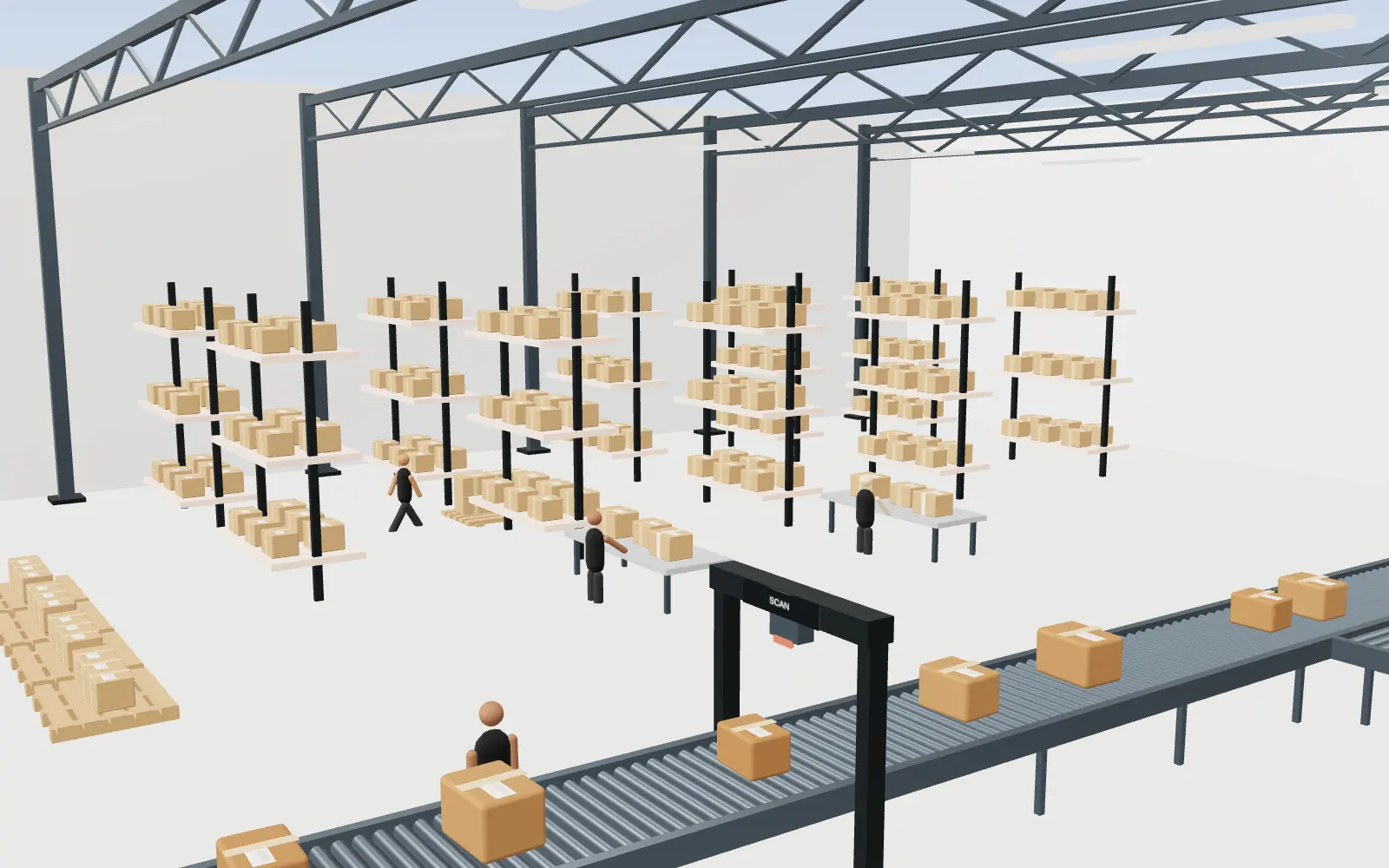 Racks, pallets and pick-pack
How stock moves
One warehouse connects both distribution legs.
Stock arrives from a plant, port or distribution centre, is received into the Delv warehouse, and moves back out to secondary warehouses, retail and distributors.
- Load
- Bulk inbound
- Vehicle
- Larger vehicle, groupage load
- Rhythm
- Scheduled replenishment
- Measured
- Receipt turnaround, stock accuracy
- Load
- Smaller loads against the delivery plan
- Vehicle
- Smaller vehicle, distribution run
- Rhythm
- Against the order cut-off
- Measured
- Dispatch adherence, exception closure
State-wise distribution planner
Plan a state, district by district.
Example: Bihar, with 38 district centres from Delv Intelligence's planning data. Choose a mother warehouse and how many secondary warehouses you'd run: districts join whichever warehouse is nearest.
Select any district on the map to make it the mother warehouse.
Planning example Other states: we plan it with you, from your own order data.
Inside the warehouse
Walk the floor, dedicated or shared.
Switch the operating model, then choose a zone to see what is controlled there and how it is measured.
Receive
ControlCount and inspect against the manifest before anything moves.
MeasuredReceipt turnaround — arrival trigger to stock release. Reviewed daily.
Store
ControlBin, status and movement are recorded as independent controls.
MeasuredStock accuracy — counted stock against the system record. Cycle count review.
Pick & pack
ControlAllocate the order, verify the pick, check the pack before release.
MeasuredContributes to dispatch adherence — reviewed daily.
Dispatch
ControlStage and release stock against the agreed cut-off.
MeasuredDispatch adherence — eligible orders released by the cut-off. Reviewed daily.
Returns & quarantine
ControlInspected before any authorised stock re-entry; damaged and quarantined stock held apart.
MeasuredException closure — open age, owner and next action. Reviewed weekly.
| Decision | Dedicated | Shared |
|---|---|---|
| Space and team | Reserved for your operation | Capacity within a shared facility |
| Workflow | Your agreed SOP and shift plan | Standard flow with agreed exceptions |
| Best fit | Stable volume or specialised work | Flexible demand and common handling |
| Commercial basis | Agreed fixed operating capacity | Agreed storage and activity units |
One stock record
Four independent controls.
Every adjustment has an owner, a reason and an audit trail. Returns re-enter stock only after the agreed inspection and disposition decision.
- LocationBin and storage position.
- StatusAvailable, on hold or damaged.
- MovementAuthorised receipt and issue.
- CountPhysical stock reconciled to the record.
Service review
The service schedule defines success.
Targets and exclusions are set against the site, SKU profile and baseline. This is the proposed review cadence.
- Receipt turnaroundDaily
Arrival trigger to stock release.
- Stock accuracyCycle count
Counted stock against the system record.
- Dispatch adherenceDaily
Eligible orders released by the cut-off.
- Exception closureWeekly
Open age, owner and next action.
Who owns what
- ClientSKU and order dataStock instructionsReturn disposition
- DelvSite workflow and peopleStock movement recordsDispatch and reporting
- Joint sign-offCapacity and peak planSOP and service targetsLaunch acceptance
The statement of work names the operating lead, escalation contacts and approval limits.
Charges follow the work
- Storage / capacityReserved space or usage over timePallet, bin or area
- HandlingReceipt, order or line activityTouches and packing
- DistributionLane, trip or shipmentWeight and destination
- Additional workSeparately approved activityReturns or special handling
The quote specifies minimums, inclusions, peak rules, taxes and pass-throughs. Rates follow your brief.
Readiness, then the pilot
- ScopeData and baseline.
- PrepareSite, team and systems.
- Four measured weeksTest receipt, test order, exception drill, readiness sign-off.
- ReviewAccept or adjust.
Mobilisation dates depend on site and integration readiness. Four weeks refers to the proposed pilot.
Your operating brief becomes a firm proposal
Send your operating brief.
Use a representative period of operating data, including seasonal or promotional peaks.
Send your operating briefInputs from your team
- SKU and stock profile
- Inbound and order volumes
- Delivery locations and windows
- Systems and launch date
Delv's proposal
- Site and capacity plan
- Layout and operating scope
- Service and ownership schedule
- Itemised commercial quote